Mate rejection
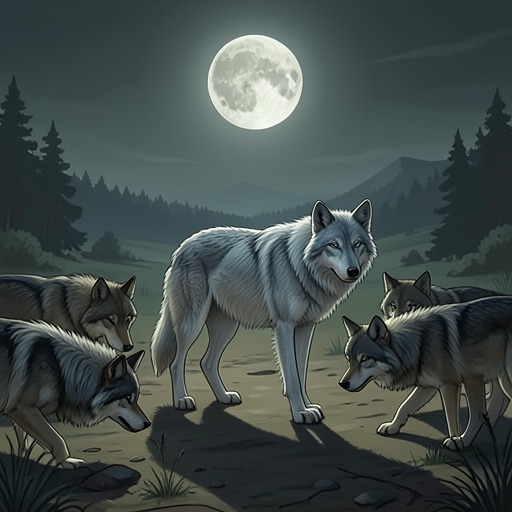
Broken Rejected MateMate rejection is the refusal of a fated mate after the bond between them has been recognized. In the story, it is not treated as an ordinary romantic decision. It is a painful supernatural rupture that affects the rejected wolf, the other person’s body and identity, family strategy, pack politics, and the future of an entire bloodline. Sierra Langford’s rejection of Alan Lowell therefore becomes both an act of self-defense and the first visible struggle over whether her life will be governed by her own choices or by the institutions and instincts of the werewolf world.
Definition and Emotional Force
Rejection is presented as a universal fear rather than a minor embarrassment. Sierra understands it through the history of her own life: she has been rejected by her kind since childhood, yet repeated rejection has not made the experience painless. The concept carries the same reality and intensity as any other major emotion, and its force is shown through the body as much as through language. Alan’s newly awakened wolf reacts before he can rationally accommodate what Sierra has done, while Sierra experiences the bond as an attraction she cannot explain and an obligation she does not want.
The bond becomes legible only after Alan’s first transformation. Sierra sees Alan in wolf form, with glowing blue eyes, and recognizes that her longstanding attraction and his inability to stay away from her have a supernatural explanation. Alan tells her, "Sierra, you’re my mate." The declaration changes the meaning of their previous encounters at once: what appeared to be inexplicable attraction is revealed as a fated connection, while Sierra’s resistance becomes a conscious refusal of a bond that the werewolf system considers decisive.
Sierra Langford’s Rejection of Alan Lowell
Sierra’s response is immediate and explicit. She pulls her hand away, steps back, says that she needs to leave, and then states, "And I reject you," causing Alan to stagger as though he has been struck. Her refusal is not an inability to recognize the bond. On the contrary, her reaction confirms that she knows exactly what being mates means. She rejects the role because she does not want a mate and does not believe she needs one; she even tells Alan that she hopes he can find someone else with whom to bond.
The scene makes autonomy the central motive of Sierra’s decision. She has already associated Peoria with the possibility of pain and has warned her father that they should never have come there. Accepting Alan would mean entering the very social order from which she and her father have spent their lives running. Her rejection is consequently directed not only at Alan but also at the future that the bond seems to impose: first shift, pack membership, marking, exposure, and the danger attached to her Dysomnia identity.
Alan refuses to treat the rejection as final. He explains that Sierra may not be able to feel the bond fully because she has not yet experienced her first shift, but he insists that rejection is not a small matter. His wolf cannot accept it, and he says that he will not accept it either. Sierra answers that he has no choice, while tears gather in her eyes; her compassion for his visible pain coexists with her determination to preserve her refusal. The emotional structure is therefore deliberately divided. Sierra is not indifferent to Alan, but sympathy does not become consent.
Limits of Rejection and the Body’s Override
Sierra initially believes that rejecting Alan might solve the problem. Her father corrects that belief after she tells him what happened. Because she has not yet turned, the rejection could not operate in the way she intended. Her first shift has not occurred, yet the mating bond has already broken the anti-shifting charm her father worked hard to obtain. The charm had been meant to prevent her transformation for years; the bond makes that protection ineffective and exposes the limits of a verbal refusal against a supernatural process rooted in the body.
This consequence gives rejection a distinctly coercive dimension. Sierra can speak the words and attempt to leave, but the bond continues to reshape her circumstances. The story does not present the mating bond as a simple guarantee of mutual happiness. It can reveal attraction, break protective magic, awaken a wolf, and place an eighteen-year-old Dysomnia in greater danger before she has chosen any of those outcomes. Rejection thus marks the point where personal decision collides with inherited rules and biological or magical compulsion.
The concept is also connected to the protection obligations of the pack. Alan later defends Sierra before Anthony Lowell and Andrew Lowell, telling them that she is his mate and invoking the pact they made to protect one another’s mates. His argument changes rejection from a private exchange into a public responsibility. Even while Sierra has refused him, Alan treats her safety as binding. His loyalty does not prove that Sierra’s rejection has disappeared; it demonstrates instead that the surrounding culture may continue to recognize a mate relationship even when one participant does not consent to it.
Negotiation, Friendship, and the Long Arc
After thinking about their conversation over the weekend, Alan offers a compromise. He agrees to do what Sierra wants and says that he will not speak about mating, but he asks to remain her friend. Sierra apologizes for rejecting him and admits that friendship may be a slippery slope toward disaster, though she agrees that they can try. This negotiation does not erase the rejection. It converts an impossible demand for immediate acceptance into a temporary arrangement in which Alan restrains his speech while the unresolved bond remains present beneath ordinary contact.
The arrangement is unstable because neither character is emotionally untouched. Sierra knows that Alan has an alarming amount of power over her, even as she tries to hide it. Alan, meanwhile, has accepted silence about mating only as a practical accommodation, not as proof that the bond has ceased to matter. Their friendship is therefore both a retreat from coercion and a route by which intimacy continues to grow. The story’s romantic movement depends on this contradiction: rejection creates distance, but the effort to maintain distance keeps the rejected bond in view.
Sierra’s family history explains why she experiences the bond as a threat rather than a promise. Her mother was recognized as a Dysomnia from birth and was nearly killed by her pack. After meeting Sierra’s father through a vision during his first shift, her mother shifted a week after they fell in love and killed two pack members. The pack turned against her, but pregnancy temporarily protected her because killing a pregnant werewolf was considered sacrilege. Immediately after Sierra’s birth, her mother was taken away and killed, and her father fled with the infant. Sierra has consequently grown up on the run, looking over her shoulder, with rejection serving as a protective attempt to prevent the bond from drawing her into the society that persecuted her mother.
Rejection, Kinship, and Pack Power
The stakes of mate rejection expand as the story links mating to kinship and succession. Anthony and Andrew Lowell are as close to Alan as brothers, yet Alan cannot fully trust them because the three share a destiny that will eventually force them to fight over who becomes Alpha. His attraction to Sierra is something he briefly considers revealing, but the approaching struggle for leadership makes secrecy necessary. Mate bonds exist inside a political system where family loyalty, bloodline, and ambition overlap rather than replace one another.
That overlap produces competing obligations. Alan’s protection of Sierra is personal because she is his mate, but it is also supported by a promise between the cousins to protect one another’s mates. Andrew later acts on the same network of obligations when he pushes Sierra aside to save her from Ronald Lowell’s attacking wolf. Andrew is clawed in the process and dies from the wound, while Alan tells Tony that he will always have him even though he can never replace his twin. These events show the larger ethical world into which a rejected mate is drawn: the bond can generate protection and sacrifice even before it has been mutually accepted.
The concept is also inseparable from the future of the Blue Blood Pack. After Andrew’s death and the disappearance of the existing leadership, the pack gathers because it cannot survive without an Alpha. Alana Lowell declines to govern temporarily and is said to have no will to become the next Alpha herself. The pack therefore turns to Alan Lowell, the remaining wolf with Alpha blood, praising his strength, courage, mercy, and fairness and noting that he has a strong mate who could form a formidable Alpha pair with him. The public language of leadership assumes a settled mate partnership even though Sierra’s history began with rejection. Her personal refusal is gradually entangled with succession, legitimacy, and the pack’s need for continuity.
From Refusal to a New Family Future
The book ultimately places the meaning of rejection against a later decision to build a family. Tony Lowell leaves to search for his own mate after a witch helps unblock a faint vision of her, showing that mate bonds remain an active source of direction even after grief and separation. Alan and Sierra, by contrast, eventually decide to try to have a baby. When Sierra brings home a pregnancy test, Alan is visibly stunned, and he leads her to the bathroom while they confront the possibility together.
Their decision carries the memory of the earlier rejection and the fear surrounding a Dysomnian child born with Alpha blood. For years, they have been nervous about how such a child could be protected and raised. They now believe that, because they are together, they can manage what lies ahead; Tony Lowell and Caroline are already raising twins successfully, giving them a living example of family life after the violence that shaped the pack. The pregnancy test does not merely signal romantic resolution. It confirms that the relationship once refused has become a chosen partnership capable of joining Dysomnia heritage, Alpha blood, and parental responsibility.
Mate rejection therefore remains a formative condition even after the relationship changes. It records Sierra’s first attempt to resist a system that defines her through species, blood, and mating, while exposing how little control a person has over the bond’s consequences. Alan’s refusal to abandon her, the breaking of the anti-shifting charm, the protection pact among the Lowell cousins, the succession crisis, and the couple’s later decision to have a child all develop from the same initial fracture. What begins as Sierra’s cry of refusal becomes the story’s central test of whether a fated bond can be transformed from compulsion into mutual commitment.